
Slow DrainsFixed For Good
A drain that gurgles once is annoying. One that keeps backing up is telling you something is wrong further down the line. Our Hollywood-based crews open the blockage and then scope the pipe with a camera so you know exactly what caused it, not just that it's clear for now.
Reading the warning signs before they get worse
Drains rarely fail without a hint first. A single sink acting up is usually a small fix, but symptoms across the house point at the shared line. Here's what Hollywood homeowners describe most often before calling our drain cleaning team, and what each one usually means.
The Same Kitchen Line, Again
Grease sets up quickly once it cools inside the pipe wall. If your kitchen drain slows every few weeks, the line likely needs hydro-jetting to strip the buildup, not another round of store-bought crystals.
Water Pooling At Your Feet
Standing water in the shower almost always traces to a hair and soap mass caught in the trap arm. We snake it out completely instead of pushing the clump further into the branch line.
A Smell That Won't Go Away
Sewer odor near a floor drain or guest bath usually means a dry trap or a partial stoppage letting gas escape backward. We chase the actual source instead of spraying air freshener over it.
Gurgling When You Flush
If the tub bubbles when the toilet flushes, or one fixture answers back for another, the blockage has moved deeper into the shared line. That's worth handling before it overflows on its own.
Everything Draining Slow Together
When sinks, tubs, and toilets all lag at once, the main is the real problem. In many older Hollywood homes that traces back to aging cast iron or roots working into a joint.
Bottled Cleaners Haven't Helped
Caustic drain cleaners heat up inside the pipe and can pit older lines without ever reaching a real grease or root blockage. If a bottle didn't solve it, mechanical clearing is the honest next step.
Snake or jetter: we pick the tool the pipe actually needs
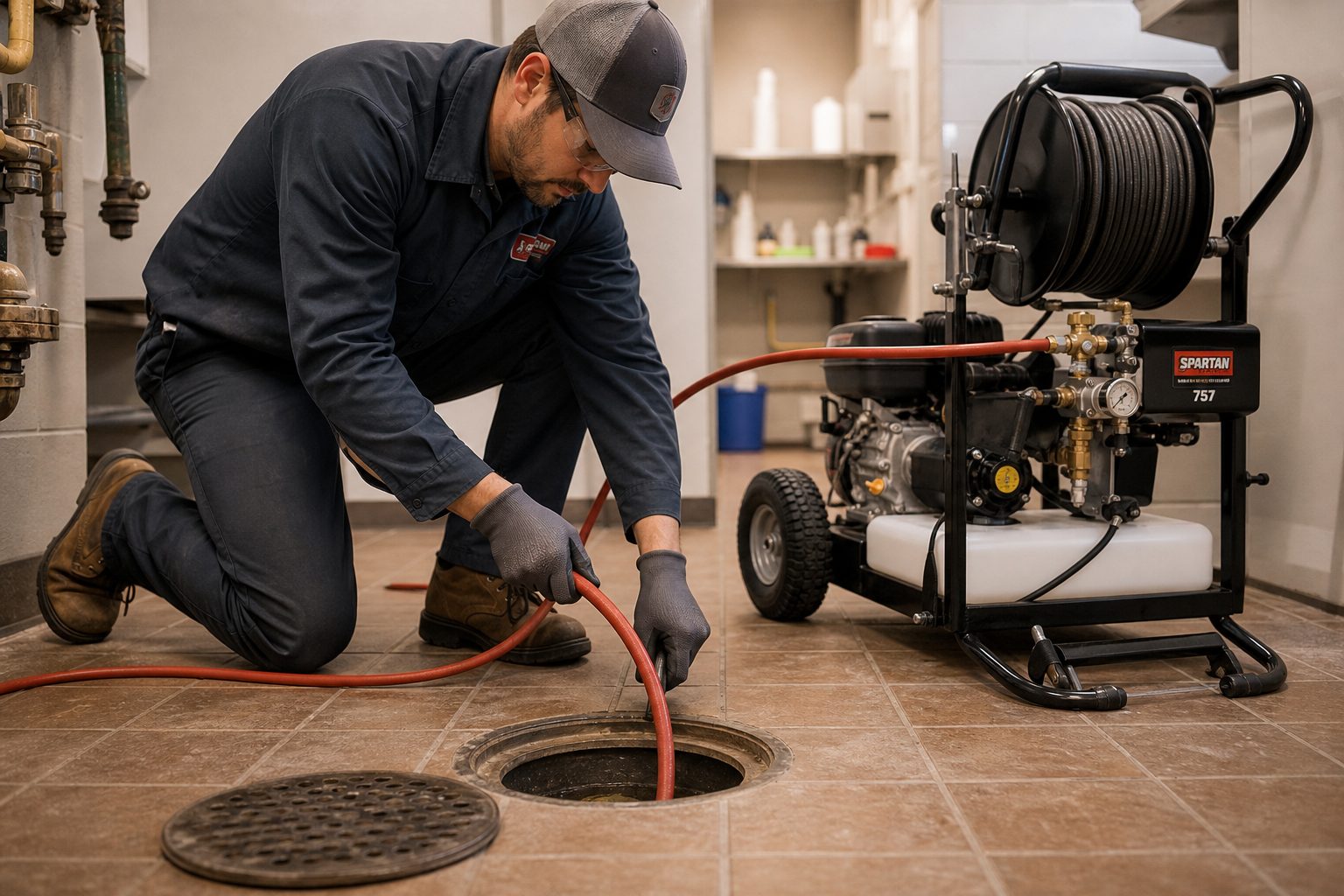
A cable machine breaks through a soft clog or hooks out a hair mass fast, which suits a single fixture well. Hydro-jetting sends pressurized water down the pipe to scrub grease, sludge, and mineral scale off the walls, restoring the line closer to its original diameter rather than just poking a hole through the mess. We check the pipe's age and condition before choosing, since older or fragile lines call for a gentler, calibrated pressure. If you're not sure which one your drain needs, describe the symptoms on the phone and we'll give you a straight answer before anyone shows up.
Clear the line, then show you why it clogged
Find The Right Access Point
We ask which fixtures are affected and locate the nearest cleanout before touching anything. Starting from the correct access point keeps the whole job efficient instead of guessing blind.
Lay Down Protection
Floor covers and containment go out before the equipment does, because clearing a stopped-up drain gets messy fast. Your cabinets and flooring stay untouched through the whole visit.
Clear It With The Correct Method
Cable work handles hair and one-off clogs; a jetter takes on grease-heavy kitchen and main lines. The pipe's condition decides which one we use, confirmed before we apply any pressure.
Run The Camera
Once flow is restored, a sewer camera goes down the line to confirm it's actually clear and to spot roots, bellies, or scale hiding further along. You get to see your own pipe on the monitor.
Test The Flow & Explain It
We run water hard to confirm the line drains freely, and lay out real options if the camera finds a structural issue, whether that's a sewer line repair or a trenchless repair.
You Leave With A Warranty
Every job closes with a written warranty on parts and labor and a plain explanation of what caused the clog. If a maintenance schedule would help your specific line, we'll say so, no pressure attached.
Every clog is priced on its own merits
We give you a number on site, after we've actually looked at the line and how it's blocked. Here's what typically moves that number up or down.
- Which line is affected: a single fixture drain is quicker than a shared main serving the entire house.
- Clearing method used: a quick cable pass on a hair clog is different scope from a full jetting run on a greasy line.
- How reachable the pipe is: a ground-level cleanout is straightforward; getting to a line through a roof vent takes more setup.
- How severe the blockage is: a light plug clears in minutes, while heavy grease, mineral scale, or root intrusion takes longer.
- Age and material of the pipe: older cast iron common in Hollywood's established neighborhoods gets a more careful, lower-pressure approach.
- Whether a camera survey is needed: confirming the root cause with video is added scope beyond just clearing the line.
Based in Hollywood, running three counties
Broward
- Hollywood
- Hallandale Beach
- Dania Beach
- Pembroke Pines
- Miramar
- Davie
Miami-Dade
- Miami
- Aventura
- Sunny Isles Beach
- North Miami
- Miami Gardens
Palm Beach
- West Palm Beach
- Boca Raton
- Delray Beach
- Boynton Beach
- Lake Worth Beach
- Wellington
What clients say after we've cleared their lines
"Our kitchen sink was clogging monthly for over a year. They finally jetted the whole line and walked me through what the camera found: years of grease coating the walls. It's been fine ever since."
"Both bathrooms were draining slow at once, which had me worried. Turned out to be the main line, and they scoped it with a camera afterward to rule out roots. Fair price, clean work, no surprises."
"We had a sewer smell in the guest bathroom for weeks. Turned out to be a dry trap combined with a small clog, both fixed the same visit. No upselling, just a clear explanation and a fair bill."
"Older house with cast iron and I was nervous about jetting damaging it. They inspected first and used the right pressure, no shortcuts. Drains like new now and the pipe held up fine."
Drain Cleaning, Answered
How often should drains be professionally cleaned?
Most homes in our service area do well with a preventive cleaning roughly every two years for main lines, and once a year for kitchen lines that see heavy cooking grease. Older homes running rougher-textured cast iron interiors tend to build scale and grease faster, so a shorter interval usually pays for itself. If you're already seeing repeat clogs, that alone tells you your current schedule isn't often enough. We base our recommendation on what the camera actually shows, not a generic maintenance package.
Is hydro-jetting safe for older cast iron pipe?
It can be, when it's done with judgment. We camera the pipe first on any line we're not already familiar with. If the cast iron is structurally sound, we choose a pressure and nozzle that clears buildup without eroding the wall further. If the camera shows the pipe is already thin or cracking, we won't jet it. Instead we'll talk through honest repair or replacement options. That inspection step is exactly why we look before we clean.
Why does a drain in my house smell like sewage?
The most common culprit is a dry P-trap in a fixture that doesn't get used much: the water seal that blocks sewer gas evaporates faster in our climate, letting the odor drift up. A partial clog trapping decaying debris, a cracked vent, or a worn wax ring can cause the same smell. We trace it to the actual source instead of covering it up. Once the blockage clears or the trap seal is restored, the smell doesn't come back.
Why does the same drain clog again after I clear it myself?
A recurring clog usually means the actual cause was never removed, just punched through. A plunger or a store-bought snake can open a hole in a grease plug enough for water to pass, but the grease coating stays behind and closes back up within weeks. Roots at a joint or scale on old cast iron behave the same way. That's why we camera the line after clearing: to tell whether you need a full hydro-jetting or a repair for something structural underneath.
How long does a typical drain cleaning appointment take?
A single-fixture clog like a hair-clogged shower is often done within the hour. A grease-heavy kitchen line or a main that needs jetting typically runs one to two hours once you include the camera inspection afterward. Difficult access, like reaching a line through a roof vent, adds time on top of that. We'll give you a realistic estimate once we've seen the situation, and we won't skip the camera step just to finish faster.
Request a Clearing
Don't keep fighting a clog that keeps coming back.
Hair-clogged shower, grease-packed kitchen line, or a whole-house backup, we clear it and camera it so you know exactly what happened. Serving Broward, Miami-Dade, and Palm Beach from our Hollywood shop, backed by a written warranty on parts and labor.
Call (954) 613-1060