
Old Pipes, New Water,One Clean Repipe
Discolored water when you first turn on a faucet, showers that trickle instead of run, and a leak that reappears a few feet from the last one are all signs your supply lines are wearing out from the inside. Our crew removes the failing galvanized, polybutylene, or worn copper and installs new copper or PEX the right way, with your water restored each night while the job is underway.
How to know your house has outgrown its pipes
Most homeowners don't wake up planning to repipe. They call about one leak, then another shows up a month later in a different wall. If two or three of the situations below sound familiar, the underlying supply lines have reached the point where individual repairs no longer solve the problem, and a full system replacement becomes the more sensible investment.
Water Runs Brown Or Yellow At Startup
If the first burst from your tap each morning looks like weak tea, the interior of your galvanized supply pipe is rusting away and shedding into the water itself. A whole-house filter treats the symptom but does nothing for the corroding steel behind the wall, so the discoloration keeps coming back until the pipe is replaced.
Showers Weaken The Moment Someone Else Turns A Faucet
Years of mineral buildup slowly shrink the usable diameter inside old copper and galvanized lines until the whole house is competing for the same trickle. Once we swap in new copper or PEX, most homeowners tell us it's the first time in years the shower hasn't dropped to a dribble when the dishwasher kicks on.
A Pinhole Leak Keeps Reappearing Nearby
Copper that develops one pinhole from age or acidic water usually has several more forming along the same run. Patching each one as it fails costs more in total than replacing the section outright, and it never actually stops the next leak from starting.
You've Got Original Polybutylene
That dull gray plastic pipe installed widely across South Florida homes through the late 1980s tends to fail suddenly at the crimped fittings, not gradually like copper. Many carriers now decline or drop coverage on homes that still have it, so replacing it ahead of a failure is usually cheaper than waiting for one.
There's A Damp Or Warm Patch On The Floor
A section of tile that stays warm, an unexplained hiss when everything is off, or a water bill that suddenly climbs are classic signs of a line failing beneath the slab. Rather than breaking through the foundation to chase it, we typically reroute that run overhead as part of a repipe, avoiding the slab entirely.
Your Home Insurance Renewal Got Complicated
Underwriters across Broward County have gotten stricter about aging galvanized and polybutylene lines, sometimes requiring proof of replacement before they'll renew or write a new policy. A permitted, inspected whole-home repipe gives you the paperwork that satisfies that requirement and closes the question for good.
Copper Or PEX: We Help You Choose, Not Guess
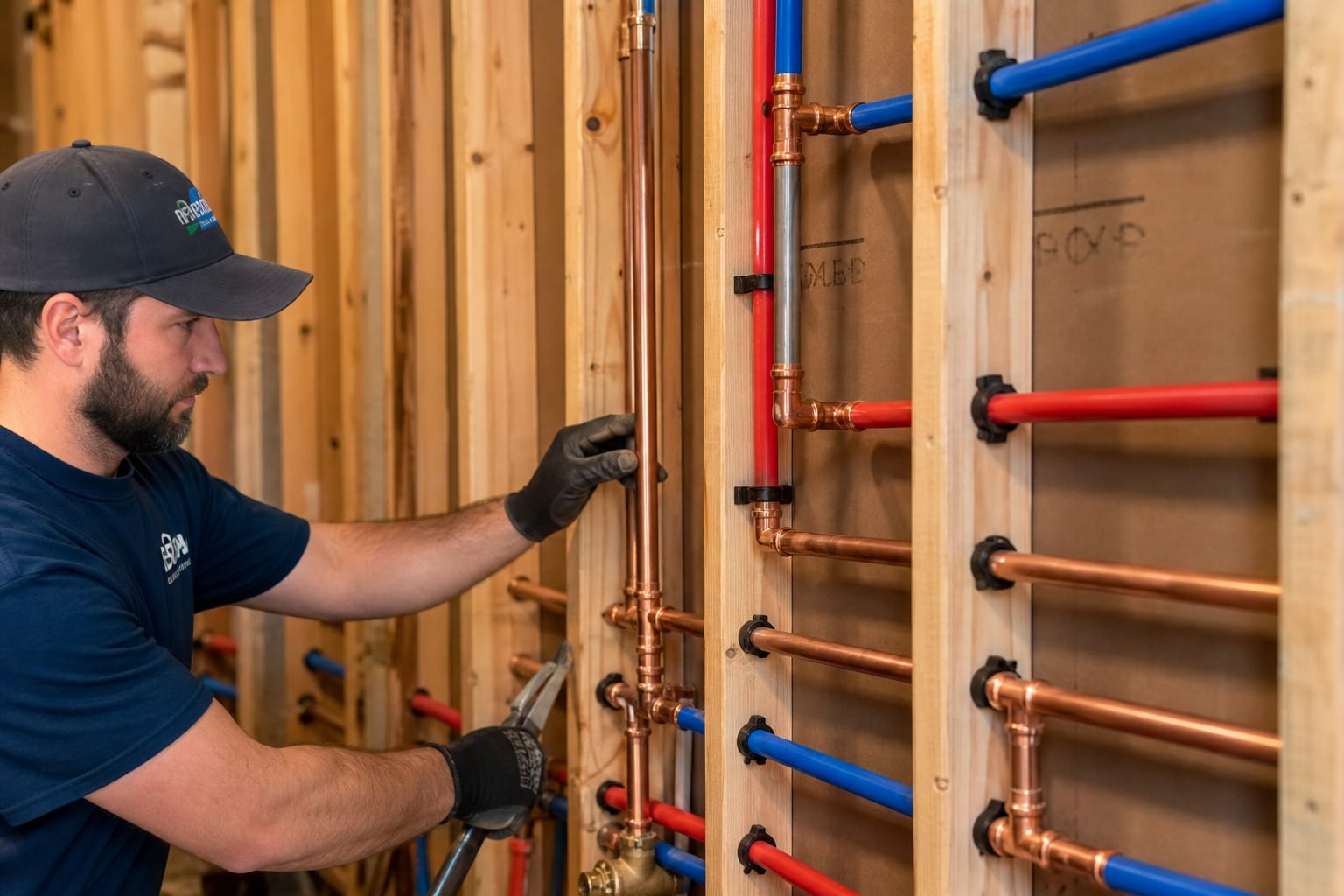
Copper has decades of history behind it, holds up well on exposed runs, and is what a lot of Hollywood homeowners already expect when they picture "real" plumbing. PEX bends around framing instead of requiring elbow joints, resists the scale buildup and pinhole corrosion that South Florida's water chemistry causes in copper, and generally means fewer and smaller drywall openings to close afterward. Neither one is automatically the right answer for every house. During your on-site walkthrough we count every fixture, trace the existing routing, and lay out both options with real numbers so you can choose with full information. If it's your drain lines rather than your supply lines that are the aging piece, ask us about cast iron pipe replacement as well.
Six steps from first call to final patch
On-Site Walkthrough
We walk the whole property, count fixtures, note where lines run through attic versus wall, and bring in leak detection equipment if there's any question about a hidden or slab leak. You leave that first visit with a written, flat-fee quote, not a vague ballpark.
Permit Filed, Home Protected
Before anything is cut, we file the permit with the local building department and lay down floor protection and furniture covers throughout the work area. Only then do we open the minimum number of access points required to run the new lines.
New Lines Run Fixture By Fixture
New copper or PEX is routed through the attic and walls to every fixture in the house, while the old failing lines are capped or removed as we go. The job is sequenced so hot and cold service returns to your household by the end of each working day.
Pressure Test Before We Close A Single Wall
Every joint is pressure tested and checked for leaks before any drywall goes back, and we schedule the city inspection so the finished work gets an official code sign-off, the same documentation homeowners increasingly need for insurance.
Access Points Patched
The openings we made to reach your lines get patched according to the scope we agreed on at the start, and the work area is cleaned before we leave. Every tap in the house should run at full pressure by the time we're done.
You Get Paperwork, Not Just A Handshake
You leave with a written warranty on both pipe and labor, plus the permit and final inspection record, giving you a clean file for your own records and anything your insurer might ask for down the road.
Every repipe estimate is built from your house, not a chart
Two homes on the same street can land on very different quotes once you factor in layout, fixture count, and how easy the lines are to reach. Here's what actually drives the price so the number you get makes sense before you sign anything.
- How many fixtures need serviceA one-bath bungalow repipes quicker and cheaper than a home with three bathrooms, a laundry, and an outdoor kitchen sink.
- Copper versus PEXMaterial cost and how many wall openings the routing needs both shift depending on which pipe you choose.
- One story or twoA single-level slab home is generally more straightforward than a two-story house where lines have to travel up through interior walls.
- Getting to the pipeAn accessible attic goes faster than lines buried behind tile floors or boxed into tight closets.
- Drywall closure workHow many access openings need patching is part of the written scope you approve before we start cutting.
- Permit and inspection feesThese are folded into the quote up front rather than added as a surprise line item later.
Based in Hollywood, running crews across three counties
Broward County
- Hollywood
- Fort Lauderdale
- Pembroke Pines
- Miramar
- Davie
- Plantation
Miami-Dade County
- Miami
- Aventura
- Miami Beach
- Doral
- Kendall
Palm Beach County
- Boca Raton
- Deerfield Beach
- Pompano Beach
- Boynton Beach
- West Palm Beach
- Delray Beach
What homeowners say after the crew leaves
"Our water had turned yellow every morning for months and I kept telling myself it was fine. Their team repiped the entire house in PEX in three days and had water on again every single evening. The difference the first clear glass made was honestly stunning."
"Our insurance letter said the polybutylene pipe had to go before they'd renew. This crew handled the permit, the pressure test, and the inspection sign-off without me having to chase anyone down. The insurance company accepted the paperwork right away."
"We'd patched two pinhole leaks in the same wall in eight months before finally biting the bullet on a full repipe. They counted every fixture during the walkthrough and the final invoice matched the quote exactly. No surprise add-ons at the end."
"A warm patch in the kitchen floor turned out to be a slab leak. Instead of jackhammering the foundation they rerouted the line overhead through the attic as part of the repipe. Much less disruptive than I braced myself for, and every wall they opened got patched cleanly."
Repipe Questions, Answered Plainly
Will my family be without water during the repipe?
No, not overnight. Water is shut off in sections while we work, but we plan the job so it comes back on every evening before we leave for the day. Most whole-house jobs in the Hollywood area run two to four days depending on how many fixtures need service and how easy your lines are to access, and we give you a realistic day count at the walkthrough, not a guess.
Is PEX actually as good as copper, or is it a cheaper substitute?
PEX is a fully code-approved material, not a downgrade. It flexes around obstacles instead of needing joint fittings at every turn, which means fewer places for a future leak to start, and it holds up better against the scale and pinhole corrosion that South Florida's water is known for causing in copper over time. Copper still has its place, especially on exposed runs where owners like the traditional look. We'll walk you through both during the estimate and let you decide based on your water, your layout, and your budget, not on what's easier for us to install.
How much drywall damage should I expect?
Some access openings are necessary to route new lines to every fixture, but we map them out during the walkthrough so you know the count before we cut anything. Access holes we create are patched by our crew as part of the job. Final paint matching is usually handled separately by a painter, and we'll tell you upfront which parts of the finish work fall on which side so there's no confusion when the invoice arrives.
Do you take care of permits, or is that on me?
We handle it. A repipe is permitted work under local code, so we file with the building department and schedule the final inspection as a standard part of the job, not an upsell. That inspection sign-off is exactly the kind of documentation homeowners now need for insurance renewal on houses that still have old galvanized or polybutylene lines listed, so we treat the paperwork as seriously as the plumbing itself.
My insurer flagged polybutylene pipe. What are my options?
You're not alone in this, it's one of the most common reasons we get calls. Polybutylene supply lines, common in homes built through the 1980s in this region, tend to fail suddenly at the crimp fittings rather than gradually, which is exactly why carriers are wary of them. Replacing it with copper or PEX, permitted and inspected, gives your insurer documented proof the risk is gone, and it removes the chance of a surprise flood from a fitting nobody saw coming.
Get A Repipe Quote
Stop Patching. Repipe It Once, Correctly.
Rusty water, fading pressure, a pinhole leak that won't stay fixed, or aging polybutylene your insurer keeps flagging: our whole-home repipe replaces the problem with new copper or PEX, permitted and inspected, with your water back on every night of the job. Insured and covered by a written warranty, serving Hollywood, Broward, Miami-Dade, and Palm Beach.
Call (954) 613-1060