Homeowner Resource
Your Guide to Surviving a South Florida Plumbing Emergency
A cracked line, a backed-up drain, or a water heater that quits overnight can turn a quiet evening into a scramble. This guide walks Hollywood-area homeowners through the shutoffs to know, the warning signs to watch, and the calls worth making before a small problem becomes a big one.
The first move: find your shutoff before you need it
Do this before anything leaks
Water damage gets worse by the minute, so the fastest thing you can do in any leak or burst pipe is stop the supply. In most Hollywood-area homes built on a slab, the main shutoff sits near the front of the house where the service line comes in, often within a few feet of the water meter or an outdoor spigot. A quarter to half turn clockwise closes it fully.
There's also a shutoff at the meter itself, usually under a lid near the sidewalk or property line, which a simple meter key can turn. Individual fixtures have their own small valves too: under sinks, behind toilets, at the washing machine hookup. Locate all of these on a normal afternoon so you're not hunting for them with water rising around your feet.
Quick check:Go find your main valve right now. Test it. If it won't budge or feels loose and stripped, that valve needs attention before it's ever tested by an emergency. A short emergency plumbing visit to replace a seized valve is far cheaper than the flood it fails to stop.
The calls that can't wait until Monday
Most plumbing issues can sit on a schedule. A handful cannot. Recognize these, act fast, and reach us at (954) 613-1060 any hour of the day or night.
A supply line lets go
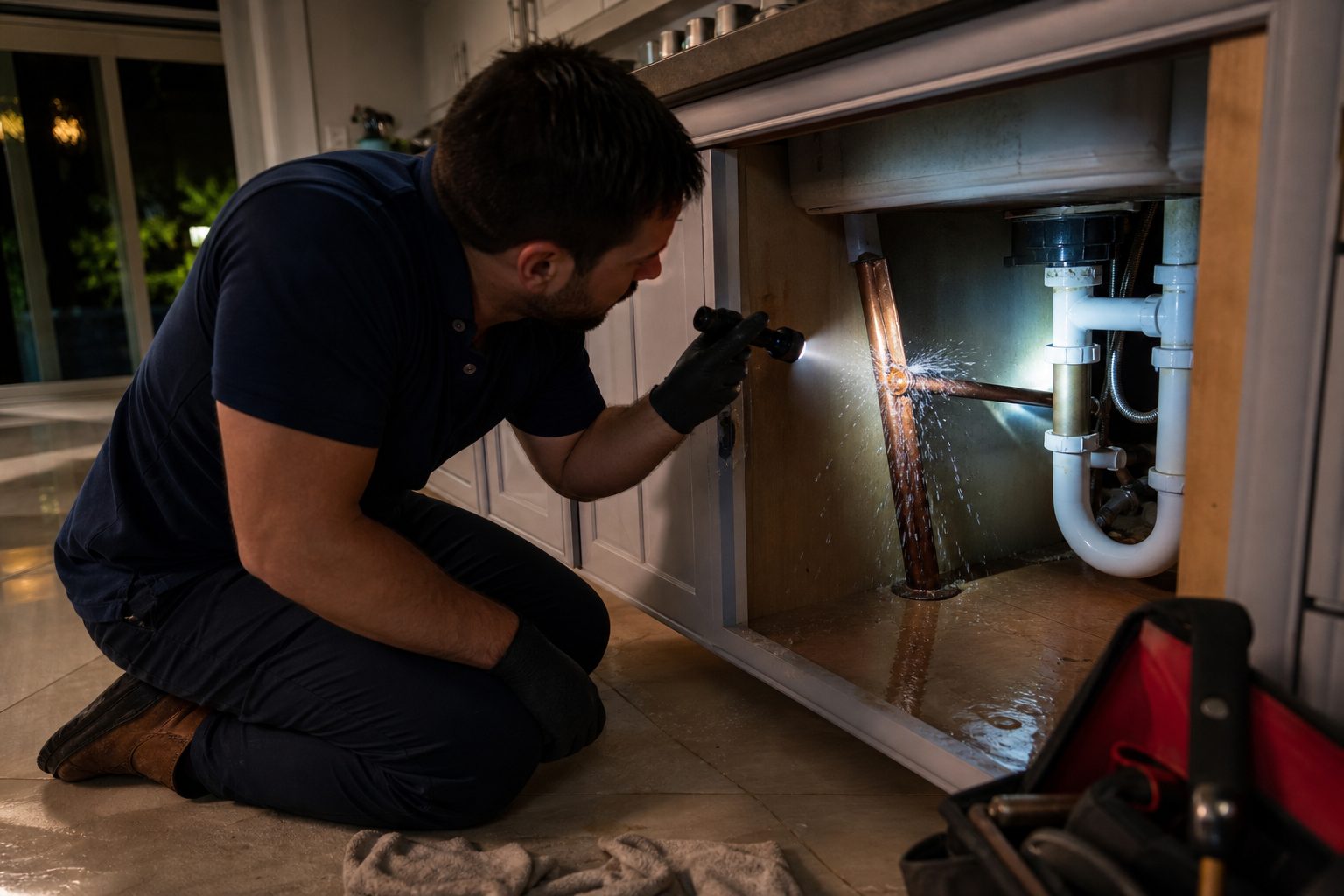
A ruptured supply pipe can dump water across a room faster than most people expect. Close the main, crack open a nearby low faucet to relieve pressure, and clear anything valuable off the floor. Copper and PEX fittings both weaken over time, so if your home is past its first couple of decades, periodic leak detection catches the failing joint before it fails on its own schedule.
Wastewater comes back up
Dark water surfacing in a shower drain or low toilet, especially timed with the dishwasher or washing machine running, points to a blocked or damaged sewer line. Stop using every fixture in the house immediately and keep kids and pets away from any standing water. Older clay and cast iron laterals common to Hollywood neighborhoods are especially prone to root intrusion, and depending on the damage the fix ranges from a straightforward clearing to trenchless sewer repair.
Every tap runs dry
A house-wide loss of water usually traces back to the main valve, the pressure regulator, or a hidden line dumping the supply somewhere out of sight. If the meter dial keeps spinning with every faucet closed, water is escaping somewhere it shouldn't, and that's a job for leak detection before the damage spreads any further under the floor.
A gas water heater starts leaking
Water pooling under a gas water heater signals real risk on two fronts. Smell rotten eggs? Leave the house and call the gas company from outside, don't touch a switch on the way out. For a leak from the tank alone, shut the cold inlet valve on top and turn the gas control to pilot or off. A tank rusting through at the base is generally not worth chasing repairs on, and a prompt water heater replacement is the safer path.
A slab leak hides underfoot
Because our homes run water lines beneath the concrete floor, a slab leak rarely announces itself with a puddle. Look for a warm patch of tile, a hissing sound with everything off, or musty smells with no visible cause. Left unchecked it can crack the slab and grow mold behind walls. Targeted leak detection locates the exact spot so the repair stays small instead of tearing up an entire room.
What to do between the call and our arrival
Protect the house first
Once you've placed the call, use the time before we arrive to limit damage. Work through this list without rushing:
- Double-check the main shutoff is fully closed and bleed pressure at a low faucet.
- Cut power at the breaker to any room where water is near outlets, never with wet hands.
- Lift rugs, boxes, and furniture off wet flooring wherever possible.
- Snap a few photos of the damage for your records before you start mopping up.
- Use towels and a bucket to contain what you can, but stay clear of standing water near power sources.
- Unlock gates, corral pets, and clear a path so our technician can get to work right away.
Skip the drain-clearing chemicals for a backed-up line. They tend to sit in a full trap and can splash back once the blockage moves, putting whoever's nearby at risk. Proper drain cleaning or hydro jetting clears it without that danger. Keep your phone nearby; we can often talk you through stabilizing things while we're on the way at (954) 613-1060.
Understanding the systems behind your walls
What actually ages and fails
Knowing how each part of your plumbing wears out helps you catch trouble while it's still small. Four systems account for most calls we get in the Hollywood area, and each one gives off warning signs long before it becomes an emergency.
Drains and sewer lines
Grease, hair, mineral buildup, and outdoor tree roots are the usual suspects behind a slow or blocked drain. If multiple fixtures are sluggish at once, the problem usually sits in the main line rather than one branch pipe. Repeat backups often mean roots or a low spot in the pipe collecting debris, which is where hydro jetting or a camera inspection pays off. Fighting the same drain clog month after month is a sign the pipe needs more than another plunger.
Water heaters
Sediment builds up in tank heaters over the years, especially with our hard water, which cuts efficiency and eats away at the tank from within. Rumbling noises, rusty-looking hot water, or a shorter supply of hot water than you're used to are all early flags. Most tanks last somewhere between 8 and 12 years, and running one much longer risks a sudden flood. Compare repair costs honestly against replacement, an aging tank rarely repays the investment.
Cast iron pipes
A lot of older Hollywood homes still rely on original cast iron drain lines. Decades of use scale and corrode the interior until the pipe cracks or collapses from within. Persistent sewer odors, recurring backups, and stains showing through the slab are classic signs. Once a system reaches this point, patch repairs only buy limited time, and a planned cast iron pipe replacement puts an end to the repeat visits.
Leaks that never surface
Some leaks never produce a puddle at all. They seep behind walls or beneath the slab, quietly feeding mold and weakening structure over months. Watch for a climbing water bill, the sound of running water when nothing's on, or a persistently damp patch of flooring. A meter that keeps moving with every fixture shut is a strong clue. Acoustic and thermal leak detection finds these before they force open a wall or floor.
The short version:Know your shutoffs, take the five urgent calls seriously, and treat every early warning sign as a reason to call sooner rather than later. We're available around the clock across the Hollywood area. Save (954) 613-1060, and keep exploring the guides below.
Keep reading
Four more guides that dig into the specific problems Hollywood homeowners run into most often.
Guide 01
Toilet running or leaking?
The quiet drip that wastes water and money without anyone noticing.
ReadGuide 02
Signs of a hidden water leak
The bills, sounds, and stains that mean water is escaping somewhere unseen.
ReadGuide 03
What a water heater really costs
Repair versus replace, tank versus tankless, and what drives the price up or down.
ReadGuide 04
Why cast iron drain lines fail
How old pipes deteriorate from the inside, and when it's time to replace them.
ReadAvailable Day and Night
A plumbing emergency doesn't check the clock.
(954) 613-1060Hollywood Emergency Plumbing SFL · 1113 N 46th Terrace, Hollywood, Florida 33021 · Lic. #XXXXXXX