
Clogged Drain Repair in Hollywood, FL
A toilet that won't flush, a shower filling with soapy water, or a kitchen sink that just sits there full: these calls come in every day and we treat them like the priority they are. Our Hollywood-based team shows up with cable machines sized to the job and, when a clog keeps coming back, a drain camera to show you the real cause.
Clogs that turn into real problems fast
Not every slow drain is an emergency, but plenty are. A fixture that's already overflowing, a floor that's wet, or a house where nothing drains anymore can't wait for a slot next week. If you're seeing any of the six situations below right now, pick up the phone. We come out today and clear it instead of leaving you with buckets and towels.
Toilet Rising Instead Of Flushing
Water climbing toward the rim instead of going down is the classic sign of a blocked trap or a plugged branch line behind it. We run a closet auger built for toilets first, then step up to a cable machine if the obstruction sits further back, and we test-flush twice before we leave.
Kitchen Or Bath Sink Won't Empty
Grease, coffee grounds, and soap film build up in kitchen lines while hair and toothpaste plug bathroom traps. Either way, water sitting in the bowl means the branch line is fully blocked. We cable it out from the P-trap or a nearby cleanout and run water hard to confirm the drain is truly open, not just draining slowly.
Shower Puddling Around Your Feet
Water rising past your ankles mid-shower almost always traces back to a dense mat of hair and soap scum wound around the drain crossbar or sitting in the trap arm. We pull that mat out whole with a drain auger rather than shredding it and pushing pieces further down the pipe.
Gurgling Or Bubbling Fixtures
A sound like air escaping when you run the washer, flush a toilet, or drain the tub means trapped air is fighting its way past a partial blockage deeper in the branch. It's an early warning: catch it now and it's a routine cabling job, ignore it and it often turns into a weekend backup.
Whole-House Backup
When the toilet, tub, and both sinks all start acting up on the same afternoon, the problem lives in the shared main line leaving the house, not any one fixture. We access it through the exterior cleanout, run a heavy-duty cable through the full run, and camera it if it's happened before so you know why.
Plunger And Store Cleaner Didn't Work
If you've already plunged it, poured in a bottle of drain opener, and the water is still sitting there, the clog is past what either tool can touch. Mechanical cabling reaches further and cuts through the actual blockage instead of dumping caustic chemicals into pipes that may already be older and brittle.
We match the tool to the pipe, not the other way around
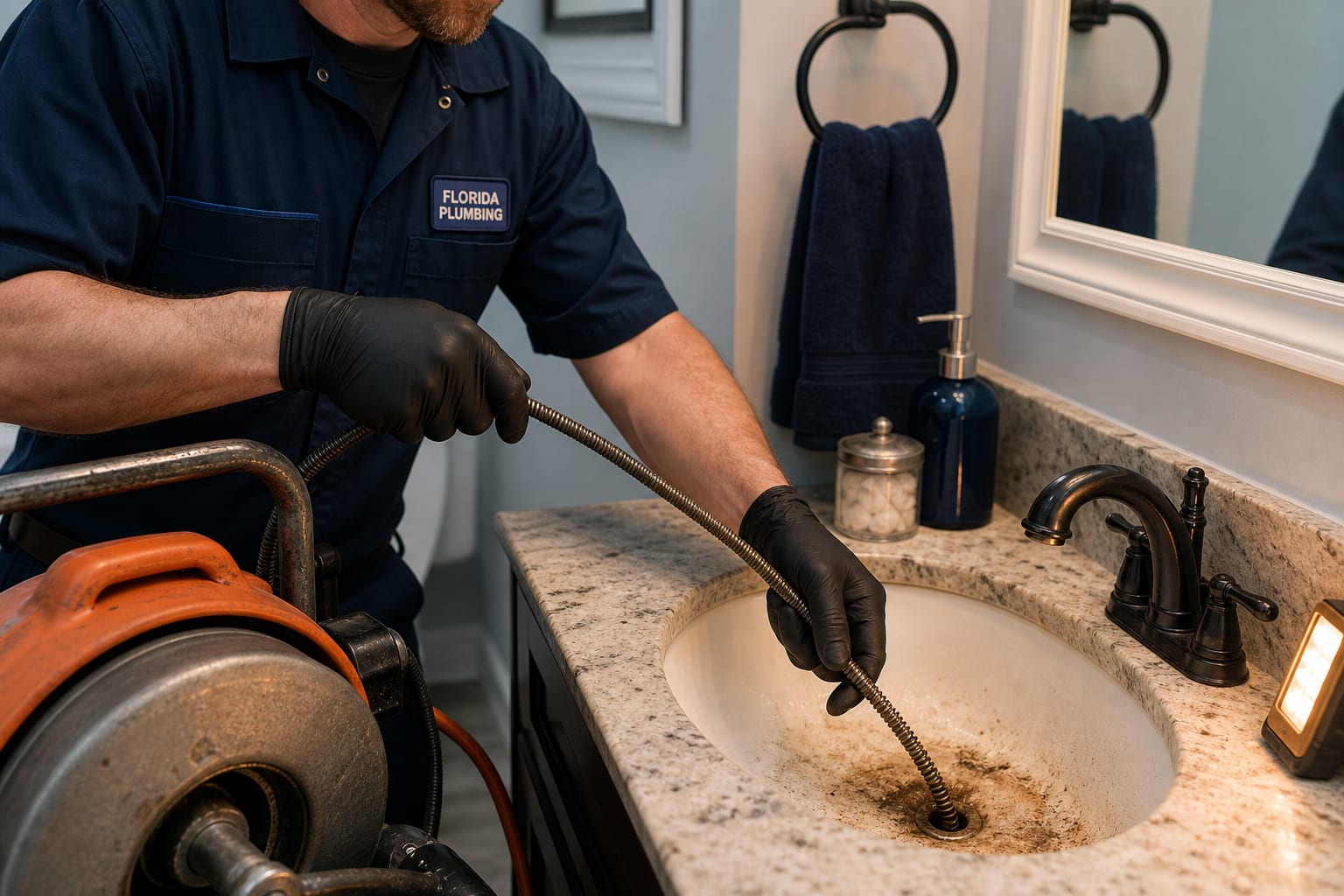
Clearing a drain properly starts before the cable ever goes in. A hand-fed drum with a light head is right for a bathroom sink or tub trap; a full-size floor machine with a cutting or grease-scraping head is what a blocked main under the yard actually needs. We cover the area, run the correctly sized cable through, and flow-test with the faucet or toilet before calling it done. If the same drain has clogged more than once, or the line is packed with grease or roots, we'll walk you through hydro-jetting as the next step: a way to scour the whole pipe wall clean rather than just poke a hole through the middle of the blockage.
Six steps from backed-up to flowing free
Ask Questions On The Phone
Before a truck even leaves, our dispatcher asks which fixture, how many drains are affected, and how long it's been backed up. That tells us whether we're bringing a small drum or a full-size main-line machine, so the tech shows up ready rather than guessing on your porch.
Cover The Work Area
A backed-up bathroom or kitchen already has enough mess. We lay down mats and towels before touching anything, so cabling out a clog doesn't turn your floor or countertop into part of the problem.
Cable The Correct Line
We feed the auger through the fixture, a nearby cleanout, or the main stack, whichever access point puts us closest to the actual blockage without extra demolition. The head matched to the job cuts through hair, grease, or a root mass instead of just poking a hole and letting the clog re-form.
Camera A Repeat Offender
Third time this year the same drain has plugged? We push a small camera through so you can see on a screen exactly what's happening in there, whether that's grease buildup, a low belly in the pipe, or roots working through a joint.
Prove It With Water
A quick flush and a run of the faucet isn't enough for us to call a job finished. We run water for several minutes, watch the fixture and any downstream connections, and only sign off once we're confident it's actually open, not just temporarily cleared.
Wipe Down And Explain Options
We leave the area drier than we found it and walk you through what we saw. If a camera turned up buildup that's likely to return, we'll mention routine drain cleaning as a way to stay ahead of it, no pressure either way.
Clear it first, understand it second
Our first job on any call is getting water moving again. Once that's done, if the clog has a history of returning, we camera the line so you're not paying to clear the same drain every few months. Here's what actually moves the price, and we walk you through it before we start, not after.
- Which line is blocked: a single fixture branch clears quickly; a shared main reached from an exterior cleanout takes more time and equipment.
- Machine size required: a hand-fed drum for a delicate trap versus a full-size floor machine with a cutting head for the main.
- How we get in: an open cleanout is a fast entry point; pulling a toilet or opening a wall access panel adds labor time.
- How solid the clog is: a loose hair mat clears in minutes; hardened grease or a root ball takes longer to cut through.
- Age and material of the pipe: many older Hollywood homes still run older cast iron or clay, which calls for lighter cabling and extra care around joints.
- Whether a camera makes sense: added on a repeat clog to actually diagnose the cause instead of clearing the same spot again next month.
Based in Hollywood, working across South Florida
Hollywood & Home Base
- Hollywood
- Davie
- Pembroke Pines
- Miramar
- Dania Beach
North & Coastal Broward
- Fort Lauderdale
- Plantation
- Pompano Beach
- Deerfield Beach
- Lauderhill
South Toward Miami-Dade
- Miami
- Aventura
- Boca Raton
- Sunrise
- See all areas
Backups handled, day or night
"Woke up to a toilet that wouldn't flush and just kept filling. Called at 6:30, someone was here before 8, had it cleared in twenty minutes, and left the bathroom cleaner than they found it. Can't ask for more than that."
"Kitchen sink had been slow for weeks and finally just stopped draining altogether. They explained the price before touching a wrench, cabled it out in under an hour, and it's been fine since. Straightforward guys, no upsell."
"Every drain in the house started backing up at the same time on a Sunday. The tech figured out right away it was the main, got it cleared from the cleanout outside, and ran a camera because it's happened before. First time anyone actually showed me what was wrong."
"Shower had water up around my ankles no matter how much I plunged it. Turned out to be years of hair built up in the trap. They pulled it out, showed me the mess, and it drains better now than it has since we moved in."
Drain Clog Questions, Answered Plainly
If I call right now, how soon can someone actually get here?
Most calls get a tech on-site within about 75 minutes, though that window shifts a bit depending on where you are in our coverage area and what else is on the board that day. Overflowing toilets, active sewage backups, and whole-house stoppages jump straight to the front of the line. Call (954) 613-1060 and dispatch will give you a real arrival estimate, not a vague "sometime today." If water is actively spilling onto the floor, mention that up front and we'll treat it as the priority it is.
I've plunged it and used a bottle of drain cleaner. Why is it still clogged?
A plunger only builds pressure right at the fixture, which does nothing for a blockage sitting further back in the branch or main. Chemical cleaners rely on heat to break down soft waste, and if the clog is hair, grease, or something solid, that chemical mostly just sits on top of it while eating away at older pipe walls. When both of those have already failed, it's a strong sign the blockage needs a physical cable to actually be pulled out or cut through, which is exactly what our machines are built to do.
Every drain in my house is backing up at once, what does that mean?
That's the signature of a main line problem, not a fixture problem. When the toilet, the tub, and the sinks are all slow or backed up on the same day, everything is draining into the same pipe leaving your home, and that pipe is where the blockage sits. We access it from an exterior cleanout with a heavy cable built for main lines, clear it, and because these can recur, we'll often recommend a camera pass to see whether roots, grease, or a low spot in the pipe is behind it.
Do I actually need a camera, or just have the drain cleared?
For a first-time clog in a single fixture, clearing it with a cable is usually the end of the story and we won't push a camera you don't need. We suggest one when a drain has backed up more than once, when a main line is involved, or when the home has older piping that's more prone to root intrusion or scale buildup. Seeing the inside of the pipe on a screen turns a guess into an answer, which matters most when you're deciding whether to keep patching the same spot or fix the actual cause.
Can cabling damage my pipes, especially if they're older?
Sized and used correctly, cabling is safe for the great majority of drain and sewer lines, including most older cast iron systems common around Hollywood. The risk comes from using a machine too aggressive for the pipe, which is why we assess the fixture and the estimated pipe age before choosing a cable and head. On systems we're not fully sure about, we start light, check progress, and step up only if it's truly needed, then confirm everything is flowing before we consider the job finished.
Request Same-Day Help
A backed-up drain doesn't fix itself overnight.
Whether it's one overflowing toilet or every fixture in the house acting up, our Hollywood-based crews cable it out today and camera it if it's a repeat offender. Licensed and insured, backed by a workmanship guarantee, and reachable around the clock across South Florida. Call now or take a look at our other plumbing services.
Call (954) 613-1060