
Homeowner Guide
Cast Iron Drain Pipes in Hollywood Homes: Repair, Line, or Replace?
Bought a bungalow in Hollywood Hills or a ranch near the Broadwalk built before 1975? The drain lines under that slab are likely cast iron, and after decades in our humid, sandy ground they don't age well. Here's how to figure out what's actually going on and what to do about it.
Older than you think
Pull the permit history on a home in Hollywood Lakes, Emerald Hills, or one of the smaller neighborhoods off Hollywood Boulevard and there's a good chance the original drain lines are still in the ground. Cast iron was the go-to material for waste piping through the mid-1970s: it was rugged, dampened sound, and didn't burn. Nobody expected homeowners fifty years later to still be relying on it.
That's roughly where we are now. A pipe rated to last about half a century is often past its expected life the moment a family moves in, which explains why cast iron issues top our service calls in Hollywood's older pockets.
Why the ground here works against the pipe
Cast iron eventually corrodes anywhere, but South Florida hurries the process along. Failure usually starts inside the pipe, where waste and moisture wear away the lowest point of the interior wall. Plumbers call this channeling: the underside rusts open while a camera looking down from above can make the pipe seem fine.
Add a shallow water table and loose, sandy soil, and the outside of the pipe stays damp all year, which keeps corrosion active. Meanwhile scale builds up on the inner walls year after year, shrinking a four-inch line down to something closer to a coffee straw. Joints loosen with age too, and that's exactly where roots find their way in.
Three failure patterns we see most
- Channeling: the floor of the pipe wears away and lets sewage leach directly into the soil beneath the slab.
- Interior scaling: rust and mineral crust narrow the pipe's diameter, and it starts catching every bit of paper and grease that passes.
- Root intrusion: tree and hedge roots squeeze into loose joints, then expand until the pipe cracks or separates entirely.
What actually gets homeowners to call us
Very few people call thinking "my cast iron is probably shot." They call because something is going wrong in the house. If you own an older Hollywood property, these are the tells worth taking seriously:
- The same shower, floor drain, or toilet keeps backing up no matter how many times it's been snaked.
- A sewer odor that shows up on and off, often strongest near a bathroom or utility closet.
- Small bugs, like drain flies or roaches, appearing without an obvious source.
- Multiple drains running slow at the same time, not just an isolated fixture.
- A soggy or unusually green strip of lawn running across the yard where the line likely sits.
- Tile that's cracking or lifting over the slab as the soil underneath erodes away.
A few of these look a lot like signs of a hidden supply-line leak too, so it's worth reading up on how to spot a water leak before it spreads. Older houses tend to face both problems at once.
Skip the guesswork with a camera. We run a fiber-optic scope through the line so you see the pipe's actual condition on screen, not an estimate. It shows you exactly where the channeling, scale, or roots are and how much sound pipe remains. Schedule one through our diagnostics team before deciding on a repair.
Reading the footage
The camera turns a hunch into a decision. A short patch of scale in an otherwise solid line calls for a very different response than a pipe that's channeled and offset in several spots. We record the entire run so you know whether you're facing a localized fix or a system that's simply worn out. That reading determines which option below makes sense.
Four ways to handle it, from lightest to most permanent
There's no single right answer for every house. It comes down to how much sound pipe the camera finds and how long you intend to stay put. Here's the progression.
1. Hydro jetting: buys breathing room
If the walls of the pipe are still structurally intact but clogged with years of scale and grease, hydro jetting blasts them clean with high-pressure water and gets flow back to normal. It won't repair a channeled or cracked section, but it can stop repeat backups long enough to plan your next move. Treat it as upkeep rather than a permanent fix.
2. Spot repair: isolate the damage
When the scope turns up one failed joint or a short cracked stretch and the rest of the line looks solid, a focused sewer line repair replaces only that section. It's the least disruptive true fix, and it makes sense when the surrounding pipe still has real life left in it.
3. Trenchless lining: renew it from within
When deterioration is spread out but the pipe hasn't lost its shape, trenchless sewer repair installs a new liner inside the old cast iron, no jackhammers, no torn-up yard. It sits between the two extremes: sturdier than jetting, far less invasive than a full excavation.
4. Full replacement: the lasting fix
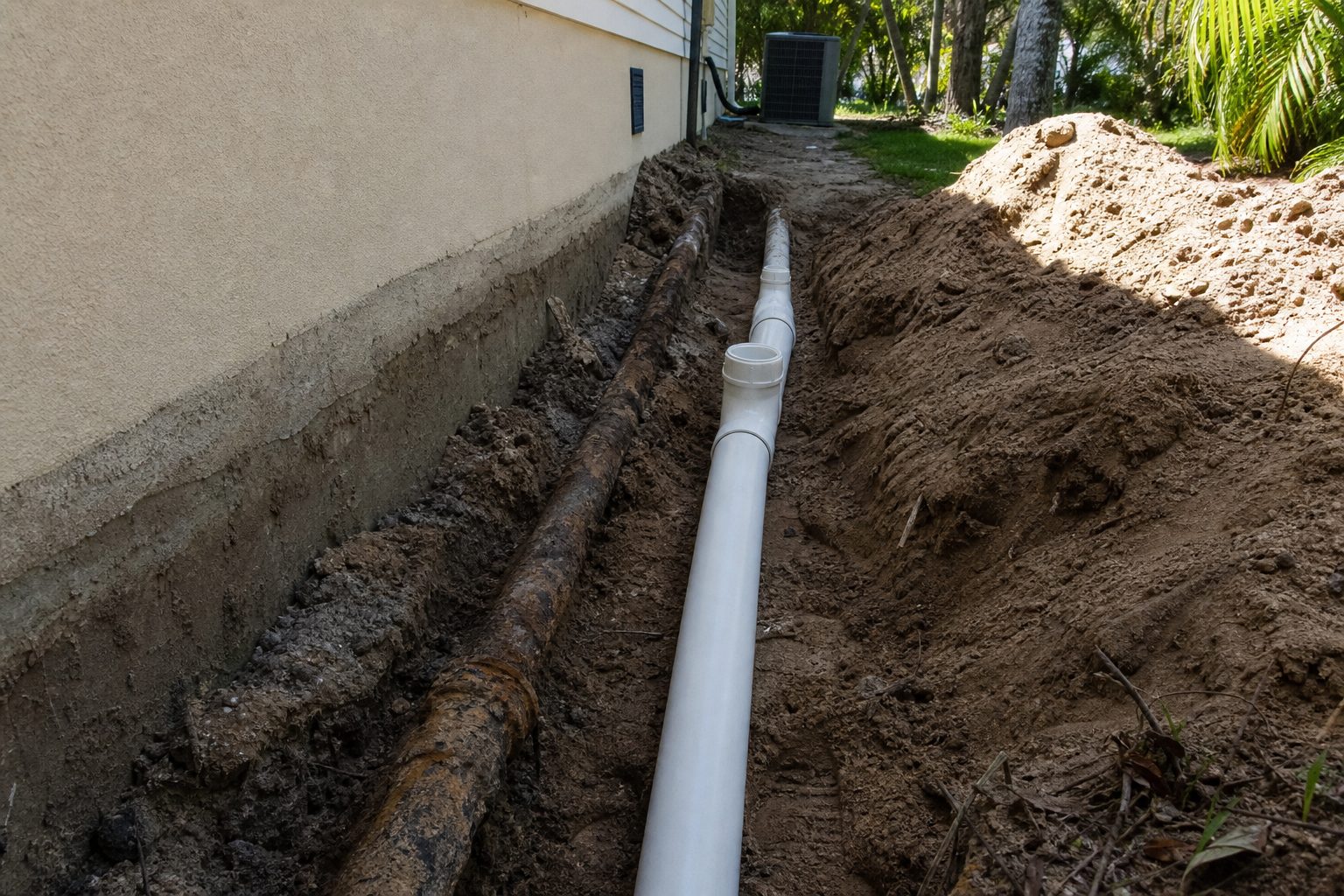
When channeling has spread throughout the line, the pipe has deformed, or several joints have separated, lining is no longer an option. Cast iron pipe replacement pulls the old system out and puts in modern PVC. It means opening the slab, but you end up with drain lines built to outlast the mortgage. If the home's original supply lines haven't been touched either, ask about pairing it with whole-house repiping while the floor is already open.
A financial reason to act sooner rather than later
More homeowners in Broward County are running into this: carriers are declining to renew, or refusing to write new policies, on houses with untouched original cast iron drains. A documented camera inspection or a receipt showing the pipe has been repaired can be the thing that keeps your coverage in place. If you've received a letter from your insurer about aging plumbing, this stops being just a maintenance question and becomes something worth handling before renewal season.
Not sure what shape your line is in? Call (954) 613-1060 and we'll get a camera inspection scheduled. You'll watch the footage with us and walk away with a clear, honest recommendation on repair, lining, or replacement.
Cast iron gave South Florida homes fifty-plus solid years. The houses that keep aging gracefully belong to owners who noticed the early signs, had a camera confirm what was really happening below the slab, and matched the fix to the actual damage instead of guessing.
Related reading
More guides for owners of older Hollywood and Broward County homes.
Library
The Hollywood Emergency Plumbing Blog
Drain, leak, water heater, and aging-plumbing guides for South Florida owners.
Browse allRelated
Signs of a Hidden Water Leak
Symptoms that overlap with drain failure, and how to tell the two apart.
Read moreService
Cast Iron Pipe Replacement
The permanent answer for channeled or root-cracked drain lines under the slab.
See serviceService
Trenchless Sewer Repair
Renew a failing line from inside, without tearing up floors or landscaping.
See serviceGet a clear answer
See the pipe on camera before you decide anything.
(954) 613-1060Lic. #XXXXXXX · Serving Hollywood & South Florida