Deep Dive
Toilet Leaking? How to Tell What's Wrong, and When to Call
A wet ring on the tile, a tank that never shuts off, a puddle you can't explain: toilet leaks almost always trace back to one of a few known trouble spots. Here's how to narrow it down before you decide whether to grab a wrench or a phone.
First, Locate the Water
Every toilet runs two separate water jobs at once: clean supply water fills the tank, and waste water leaves through the drain below. A leak can come from either job, or from one of the fittings holding them together. The single most useful thing you can do before touching anything is figure out exactly where the water first appears. That location tells you almost everything you need to know about how urgent the problem really is.
Wipe every surface dry with a towel, then flush and watch closely. Does moisture return only at the floor line after the flush cycle? Is there a thin trickle running down a hose in back? Is the tank refilling on its own with no one touching the handle? Each of these points toward a different part of the toilet.
Water pooling at the floor: check the wax seal
Puddling around the base of the bowl, particularly right after someone flushes, usually means the wax seal under the toilet has given out. That ring is what keeps the connection between the toilet base and the drain flange watertight. Once it hardens, splits, or the toilet starts rocking on its bolts, wastewater escapes with every flush.
Two clues usually go together: an odor that's a bit sour or sewage-like, and a toilet that shifts slightly when you sit down. This repair is more involved than it looks. It requires lifting the toilet off the flange completely, cleaning away the old wax, inspecting the flange for damage, and resetting the bowl level and square. Skip a step and the new seal fails within weeks, all while water keeps soaking into the floor underneath.
Why this is urgent on Florida flooring: On slab foundations, water from a failed base seal spreads sideways under baseboards and cabinets with nowhere else to go. In condos and townhomes, the same leak can soak through to a neighbor's ceiling. Our leak detection crew can pinpoint hidden moisture before it becomes a bigger repair.
Drips coming from behind the bowl
Water tracking down the back of the toilet or gathering behind it points somewhere above the base: the tank-to-bowl gasket and its two mounting bolts. That thick rubber gasket dries out with age and the bolts underneath corrode, letting water weep out of the joint each time the tank fills back up.
Dry the joint completely and watch for beads forming near the bolt heads or along the gasket line to confirm the source. A quarter-turn on the bolts sometimes tightens things enough to stop a minor drip, but go too far and porcelain cracks, turning a cheap fix into a full toilet swap. When the gasket has actually failed, replacing it is possible on your own, though many homeowners would rather hand it off.
Hoses, valves, and slow supply drips
The braided line running to the tank and the wall valve feeding it are two of the most common slow-drip spots in any bathroom. This kind of leak shows up as a thin trail of clear, odorless water below the valve or where the hose connects to the tank.
Safe to try yourself
- Snug a loose connector nut by hand, then a light quarter-turn with a wrench if it still drips.
- Replace a cracked or bulging supply hose with a new braided one.
- Swap a worn flapper or fill valve when they're clearly the culprit.
Time to call us
- A shut-off valve that's frozen up or leaking from the stem itself.
- Anything related to the wax seal, a cracked bowl, or a damaged flange.
- Water that's already soaked into subfloor, drywall, or the unit below yours.
The toilet that hisses at night
Not all toilet leaks land on the floor at all. If your toilet cycles on its own in the middle of the night, hisses randomly, or seems to refill for no reason, water is leaking straight from the tank into the bowl internally. Nine times out of ten that's a worn flapper, the rubber disc at the bottom of the tank that no longer seats properly.
Here's an easy test: drop a few drops of food coloring into the tank and check the bowl after 15 minutes without flushing. Color in the bowl confirms a leaking flapper. It's one of the most beginner-friendly toilet repairs there is, but ignoring it quietly inflates your water bill and can wear out the fill valve faster than it should.
Sometimes it's just condensation. Florida humidity meets cold tank water and the outside of the tank sweats, which can look exactly like a leak at first glance. Wipe the tank dry and check back in a few minutes: an even film of moisture across the whole surface is condensation, while a steady stream running from one specific spot is a real leak.
When the toilet is just a symptom
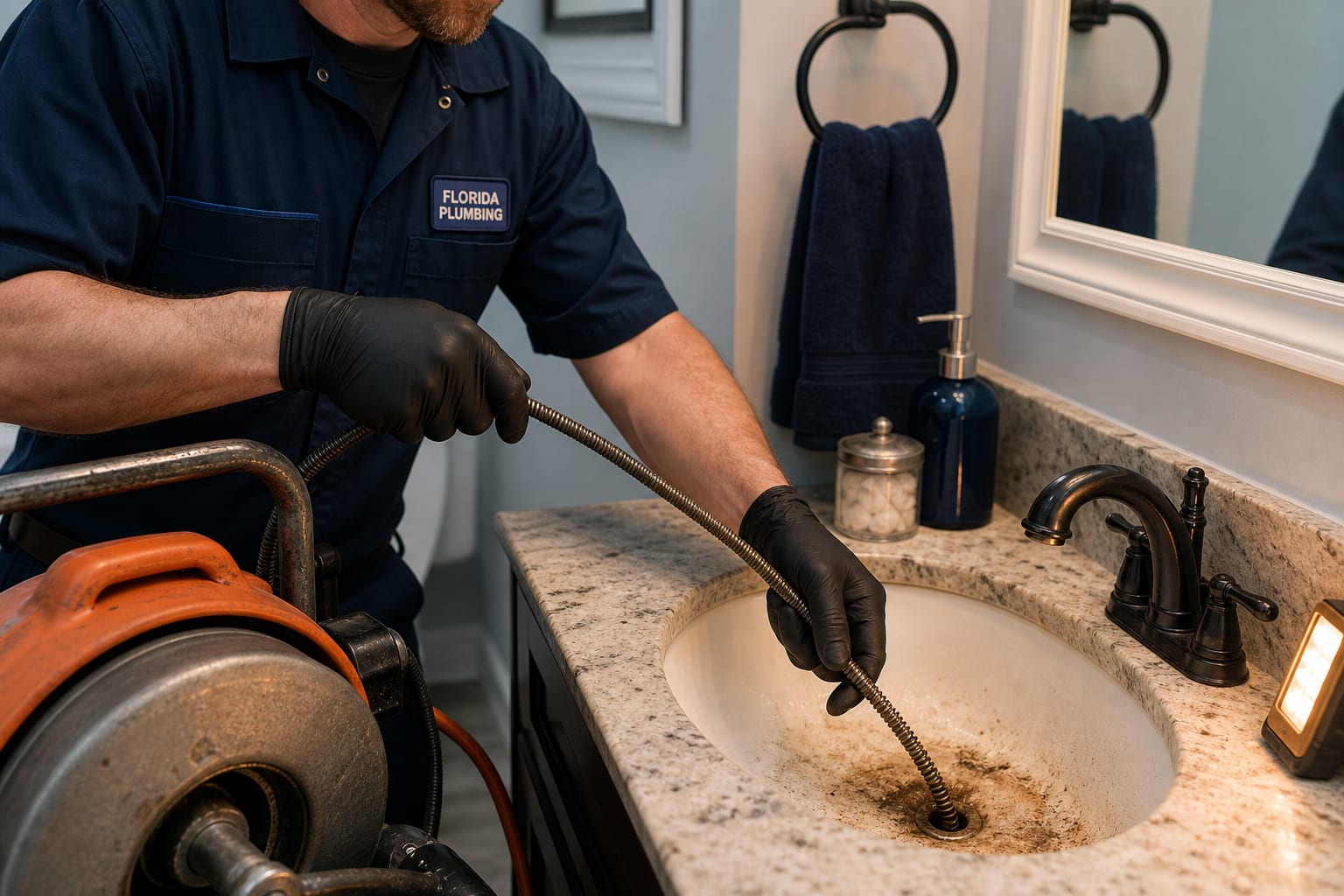
A partial drain clog further down the line can push water back up around the toilet base, looking exactly like a failed wax seal even though the seal is fine. If other fixtures in the house are gurgling or slow to drain whenever the toilet flushes, the real issue is likely in the line itself, which calls for professional drain cleaning rather than a new toilet seal.
Damp baseboards, a warm patch on a slab floor, or a water bill that spiked without explanation can all mean the toilet is just the visible piece of a larger leak. Our guide on spotting a hidden water leak early covers what to look for in the rest of the house.
What to do right now
A running tank or a slow drip on a supply line is usually an easy weekend fix. Water pooling at the base, a rocking bowl, a cracked tank, or moisture that's already spread to your floor is a job for a licensed plumber, especially in Hollywood's mix of slab homes and stacked condos where damage spreads before you notice it. If you're unsure, shut off the valve behind the toilet, clean up the water, and give us a call. It costs far less than replacing flooring or subfloor later.
Hollywood Emergency Plumbing SFL handles toilet leaks throughout the area, from quick resets to tracking down water that's found its way somewhere it shouldn't be. Call us anytime at (954) 613-1060. Lic. #XXXXXXX.
More from our guides
A few more reads to help you catch problems early and know exactly who to call.
Full Guide
The Complete Home Plumbing Guide
Everything from leaks to clogs to fixture repairs, all in one place.
Read moreRelated Read
Signs You Have a Hidden Water Leak
Warm slab spots, musty smells, and rising bills: how to spot a leak before it spreads.
Read moreOur Service
Leak Detection
We find water hiding in walls, floors, and slabs before it turns into real damage.
Learn moreOur Service
Drain Clog Removal
When a stubborn clog downstream makes a toilet look like it's leaking.
Learn moreWater Where It Shouldn't Be?
Get your toilet leak fixed before it spreads.
(954) 613-1060Licensed & Insured. Lic. #XXXXXXX. Serving Hollywood, FL