
Homeowner Guide
What a New Water Heater Actually Costs in Florida
Two quotes for the "same" tank can land thousands apart. The gap is rarely the appliance itself, it's the code work, the access, and the extras a lowball quote quietly skips. Here's what actually builds the number.
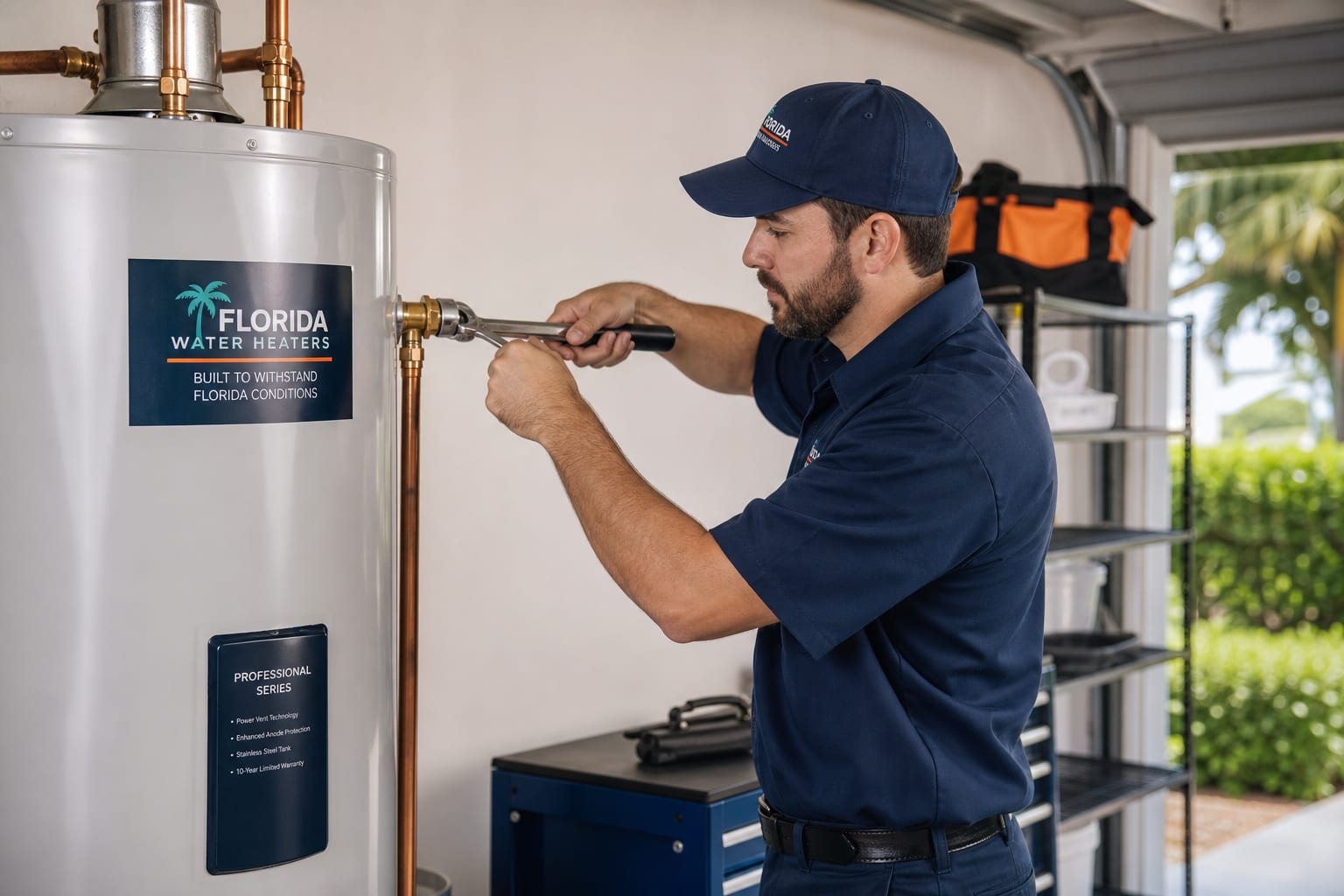
Ask five plumbers what a new water heater costs and you'll get five different ranges, and none of them are wrong. The tank itself is a small part of the equation. What actually sets the final number is a combination of equipment choice, mandatory Florida code items, where the unit sits in your home, and how much of the old setup has to be redone to bring things up to standard.
This guide walks through each of those pieces so you can look at a written estimate and understand exactly what you're paying for, plus how to tell when a repair still makes more sense than tearing out a working tank.
Start with the unit: size and fuel source
Capacity is the first variable. Households that outgrew a 40-gallon tank often step up to 50 or 65 gallons, and each jump adds a bit to the equipment cost. That part is predictable. The bigger swing comes from fuel type: swapping electric for gas, or the reverse, means new supply lines, venting changes, and sometimes a different spot in the home altogether. A straight swap, same fuel, same size, same location, is always the cheapest path forward.
Standard tank or tankless unit
Tankless units cost more upfront, but the real budget number is in the conversion work: a larger gas line, updated venting, and in many cases a dedicated electrical circuit for the ignition module. None of that shows up on a spec sheet, only on the invoice. In exchange you get continuous hot water and reclaim closet or garage space, which matters in smaller Florida homes. Just plan for the supporting work, not only the unit price.
Simple way to think about it: every change from your existing setup, fuel, size, or location, adds labor. Fewer changes means a tighter, more predictable quote.
The Florida code items nobody mentions upfront
This is the part that trips up most homeowners comparing quotes. A licensed installer in our area has to include several safety components beyond the tank, and skipping them isn't optional, it's a code violation:
- A drain pan piped to an approved exterior discharge point
- A properly terminated temperature and pressure relief line
- An expansion tank where the system is a closed loop
- Hurricane-rated strapping to anchor the tank in place
- Proper shutoff valves and dielectric unions on the supply lines
If one quote comes in noticeably lower, this list is almost always where the savings came from. It's also the difference between an install that clears a city inspection and one that doesn't.
Where the tank lives changes the labor bill
A garage tank at ground level is the easiest job on the calendar. A utility closet inside living space takes more care with the pan and the discharge routing so nothing drains into the house. An attic install is the toughest of the three: crews work in tight, hot spaces to remove the old unit and set the new one, and that extra time and difficulty shows up as extra labor on the quote.
Permits, inspection, and haul-away
Most cities in Broward County require a permit and inspection for a water heater swap, confirming the safety items above were actually installed. That protects your homeowner's insurance and matters at resale. Removing and disposing of the old tank is a smaller add-on, but it should still appear as a line item rather than something you're left to handle yourself.
Should you repair it instead?
Replacement isn't always the right call. Before you price a new unit, it's worth confirming the old one is actually done.
Repair makes sense on a younger unit
If your tank is under six years old and the problem is a failed heating element, a bad thermostat, or a stuck relief valve, that's usually a quick and affordable fix. Have a technician run a water heater repair diagnostic first so you're not replacing a tank that only needed one part.
Replacement makes sense past year ten
Once a tank crosses the decade mark, the calculus flips. Rust-colored water, a rumbling tank full of sediment, or moisture pooling at the base are signs the steel itself is failing. Know the signs of a water leak so you catch it early. A tank that's actively leaking won't be fixed with a new part, and at that point a water heater replacement stops repeated repair bills before they start.
A local wrinkle: South Florida's hard water builds mineral scale inside the tank and around the heating elements. That scale forces the unit to work harder and speeds up corrosion from the inside out, which is why tanks here often wear out faster than the manufacturer's rated lifespan suggests.
How to read your estimate
A trustworthy quote breaks out the tank and capacity, the required safety items, the labor for your specific location, the permit, and disposal. If one number looks too good compared to the rest, ask directly what's missing. Nine times out of ten it's the pan, the expansion tank, or the permit fee, and those aren't extras, they're the job.
Your home's setup is what actually determines the price, not a chart online. Call (954) 613-1060 and our team will look at your unit, your fuel type, and your access before quoting a number, so you know exactly what you're paying for and why.
Related reading
More guides for homeowners weighing a repair against a replacement.
Full Library
All Plumbing Guides
Browse every homeowner guide we've written on repairs, replacements, and local code.
Read moreTry This First
Water Heater Repair
Elements, thermostats, and relief valves: the fixes worth attempting before you replace anything.
Read moreTime For A New One
Water Heater Replacement
What a code-compliant installation includes and why it costs more than the box.
Read moreKnow The Signs
Water Leak Warning Signs
A failing tank is only one cause. Learn the early clues before real damage sets in.
Read moreSpeak With A Licensed Plumber
Get a clear price on your water heater today
(954) 613-1060Licensed & Insured · Lic. #XXXXXXX